


How to Choose the Right Scaffolding System for Your Construction Project
Choosing the right scaffolding system is an important part of planning any construction, maintenance, renovation or industrial project. The right system should provide a stable working platform, convenient access, suitable working height and the mobility or configuration required for the job.
With different types of scaffolding available, selecting the right option requires more than simply choosing a tower based on height. Project location, working conditions, access requirements, frequency of movement, load requirements and the type of work being performed should all be considered.
For projects that require lightweight, movable and practical access equipment, an aluminium scaffold can be a suitable option. Apexz Access Equipments manufactures aluminium scaffolding solutions designed for applications where convenient access, mobility and practical site operation are important.
What Is a Scaffolding System?
A scaffolding system is a temporary access and working structure used to provide workers with a safe and convenient platform at elevated levels. Scaffolding can be used during construction, building maintenance, painting, electrical work, installation, repair, inspection and other activities where workers need to operate above ground level.
Different projects require different scaffolding configurations. A compact tower may be suitable for indoor maintenance, while a larger mobile scaffold tower may be more appropriate for construction or industrial applications.
When selecting a system, the objective should be to match the scaffolding configuration with the actual requirements of the project.
1. Understand the Type of Work
The first step is to identify exactly what work will be performed from the scaffold.
Construction projects can involve activities such as:
- Painting and plastering
- Electrical installation
- HVAC installation and maintenance
- Building maintenance
- Ceiling and lighting work
- Mechanical installation
- Industrial maintenance
- Inspection and repair
- General construction work
For short-duration maintenance work, a mobile scaffold tower can provide the flexibility needed to move between working locations. For projects involving extensive construction activities, the required platform size, working height and configuration may be different.
Understanding the work helps determine the appropriate scaffold tower design before considering specific dimensions or features.
2. Determine the Required Working Height
Working height is one of the most important considerations when choosing scaffolding.
Before purchasing or hiring a system, determine the maximum height at which workers need to perform their tasks. Choosing equipment that is unnecessarily large can make transportation and positioning more difficult, while equipment that is too small may not provide the required access.
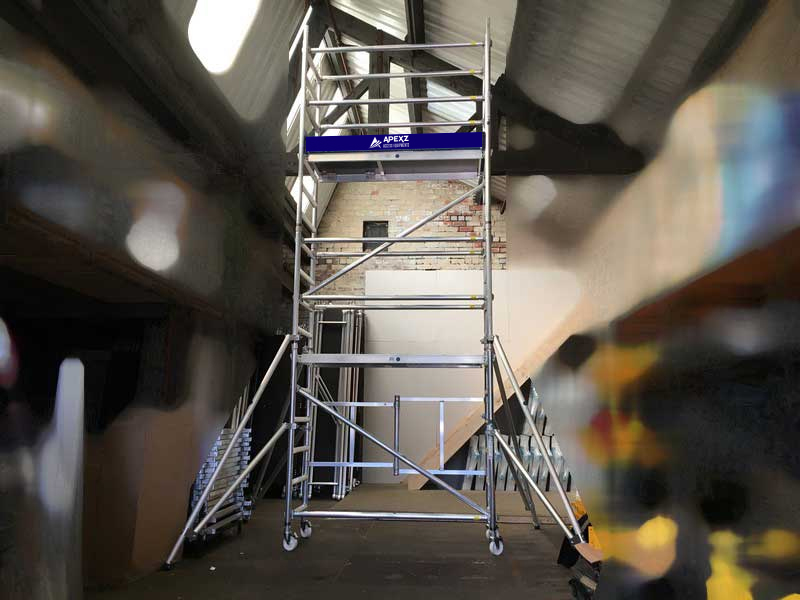
A mobile scaffold tower is available in different configurations and heights, allowing businesses to select equipment according to their application.
The actual working requirements should always be assessed rather than selecting a tower based only on its overall height. The platform height, worker reach, working position and surrounding environment should all be considered.
3. Consider Mobility
Some construction and maintenance projects require workers to access several locations during the same job. In these situations, repeatedly dismantling and rebuilding a fixed structure can be inconvenient.
A mobile scaffold tower is designed to provide greater mobility, allowing the equipment to be repositioned when appropriate site conditions and operating procedures permit.
Mobility can be particularly useful for:
- Large rooms
- Warehouses
- Industrial facilities
- Commercial buildings
- Maintenance projects
- Construction sites
- Installation work
For businesses that regularly move access equipment between work areas, an aluminium scaffold with a mobile configuration can provide a practical solution.
4. Aluminium Scaffold for Lightweight Access Applications
The material used to manufacture scaffolding is another important consideration.
An aluminium scaffold can offer advantages where lightweight access equipment and easier handling are important. Aluminium is widely used in access equipment because it provides a useful combination of strength and relatively low weight.
This can make aluminium scaffolding practical for applications where equipment needs to be assembled, repositioned or transported between different working areas.
However, material selection should always be considered alongside the equipment’s rated capacity, design, dimensions, intended application and manufacturer’s instructions.
Apexz Access Equipments focuses on aluminium access equipment, providing scaffolding solutions for different construction, maintenance and industrial requirements.
5. Check the Available Working Space
The physical environment should be evaluated before selecting a scaffolding system.
A large scaffold tower may not be practical in a narrow corridor, restricted work area or congested construction environment. In these situations, a more compact configuration may be appropriate.
A narrow mobile scaffold tower can be considered for applications where available floor space is restricted, while a wider configuration may provide a larger working platform where space allows.
Measure the working area before selecting equipment and consider:
- Doorway dimensions
- Corridor width
- Ceiling height
- Obstacles
- Floor conditions
- Access points
- Available storage space
- Movement requirements
This helps prevent problems during delivery, assembly and use.
6. Consider Stabilization Requirements
Stability is a fundamental consideration when selecting scaffolding.
Depending on the design and application, mobile scaffold towers may incorporate stabilizers or other features intended to improve stability. A mobile scaffold tower with stabilizers can be useful where additional stabilization is part of the equipment’s design and operating requirements.
The exact requirements depend on the specific tower, height, configuration, site conditions and manufacturer’s instructions.
Workers should never modify a scaffold system by adding makeshift components or using it outside its intended configuration.
7. Think About Access to the Platform
The method used to reach the working platform should also be considered.
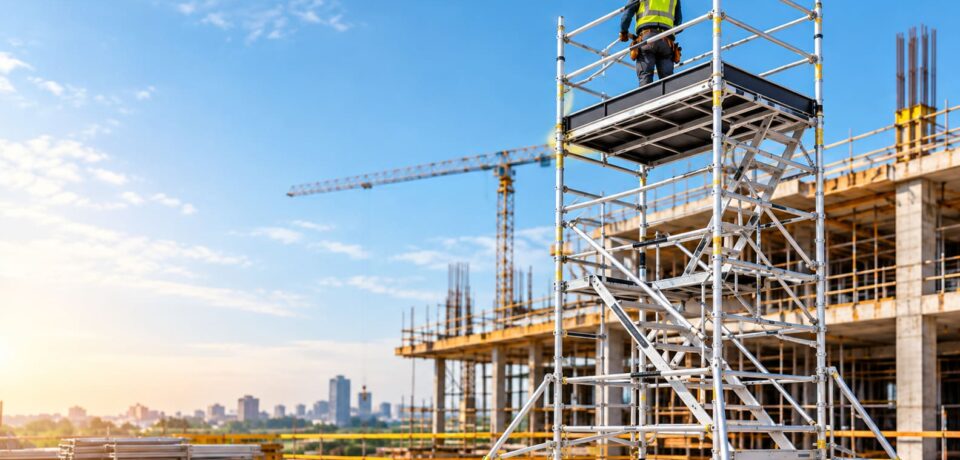
For some applications, a scaffold tower with an integrated stairway can make access more convenient. A mobile scaffold tower with stairway may be particularly relevant for projects where workers need to move frequently between the ground and elevated working platform.
Stairway configurations can also be useful when transporting tools or equipment to the working level, subject to the manufacturer’s specified usage and applicable safety procedures.
The choice between ladder-access and stair-access configurations should therefore be based on the nature of the work and the requirements of the project.
8. Consider the Working Platform
The platform should provide sufficient space for the work being performed without creating unnecessary congestion.
Consider how many workers will use the platform and whether they need to carry tools, materials or equipment. A larger working area may be appropriate for certain construction tasks, while a compact platform can be more practical for limited maintenance work.
The platform’s rated capacity must always be checked before use. Workers should not exceed the manufacturer’s specified load limits.
9. Evaluate Floor and Site Conditions
A scaffolding system is only as suitable as the environment in which it is being used.
Before positioning a scaffold, assess the floor or ground conditions. Uneven, damaged, unstable or unsuitable surfaces can create additional risks.
Consider whether the work area contains:
- Uneven flooring
- Slopes
- Openings
- Construction debris
- Wet or slippery surfaces
- Obstacles
- Traffic or moving equipment
For mobile equipment, the wheels, locking mechanisms and other components should be checked according to the manufacturer’s instructions before use.
10. Select Equipment from a Suitable Manufacturer
The manufacturer and construction quality of access equipment should also be part of the purchasing decision.
Professional users should look for equipment with clearly defined specifications, appropriate documentation and a design suitable for the intended application.
Apexz Access Equipments provides aluminium access equipment designed for construction, maintenance and industrial applications. Its aluminium scaffold solutions include different configurations intended to address varying access requirements.
For example, depending on the project, users may consider an aluminium mobile scaffold tower with stabilizers, a narrow tower configuration, a wider tower configuration or a tower with an integrated stairway.
The appropriate model should always be selected according to the project’s working height, available space, access requirements, load requirements and operating environment.
11. Consider Transportation and Storage
Scaffolding is often transported between different projects or stored when not in use. Equipment that is practical to handle and organize can make site operations more convenient.
When comparing options, consider:
- Overall equipment weight
- Component dimensions
- Ease of transportation
- Storage requirements
- Assembly and dismantling requirements
- Vehicle space
- Frequency of movement between sites
This is another area where aluminium scaffold systems can be useful for businesses that need relatively lightweight access equipment.
12. Don’t Choose Scaffolding Based on Price Alone
Cost is naturally an important part of any construction project, but the lowest purchase price should not be the only consideration.
A suitable scaffolding system should provide the required configuration, working height, access arrangement, platform capacity and practical usability for the intended application.
A poorly matched system can create operational difficulties and may require additional equipment or modifications later.
Instead, compare equipment based on:
- Design
- Material
- Working height
- Platform dimensions
- Access method
- Mobility
- Stabilization features
- Rated capacity
- Intended application
- Manufacturer support
- Maintenance requirements
Apexz Access Equipments: Aluminium Scaffolding Solutions
Choosing the right access equipment is about finding a scaffolding solution that matches the working height, available space, access requirements and nature of the project. Apexz Access Equipments offers aluminium scaffolding solutions designed for construction, maintenance and industrial applications where practical access and mobility are important.
The following Apexz products can be considered for different project requirements:
The Mobile Scaffold Tower with Stairway is an aluminium mobile access tower designed for projects where convenient movement between the ground and elevated working platform is important. Its stairway configuration makes it suitable for construction, maintenance, installation and other applications requiring regular platform access.
The Mobile Scaffold Tower with Stabilizers – Narrow Version is designed for applications where working space may be limited. Its narrower configuration can be considered for restricted areas while its stabilizer arrangement provides additional support according to the manufacturer’s specified setup and operating requirements.
The Mobile Scaffold Tower with Stabilizers – Wide Version provides a wider configuration for applications where additional working space is required. It can be considered for construction and maintenance environments where the available floor area allows a wider mobile aluminium scaffold setup.
Choosing Between These Apexz Scaffold Towers
The three configurations address different access requirements:
| Apexz Product | Suitable consideration |
|---|---|
| Mobile Scaffold Tower with Stairway | Projects requiring convenient stairway access to the working platform |
| Mobile Scaffold Tower with Stabilizers – Narrow Version | Projects where available working space is relatively restricted |
| Mobile Scaffold Tower with Stabilizers – Wide Version | Projects where a wider tower configuration and additional working space are required |
The final selection should always be based on the project’s working height, site conditions, required platform space, access requirements, load limitations and the manufacturer’s specifications.
For construction companies, facility managers and maintenance teams looking for aluminium scaffold solutions, reviewing these configurations can help identify equipment that matches the practical requirements of the worksite.